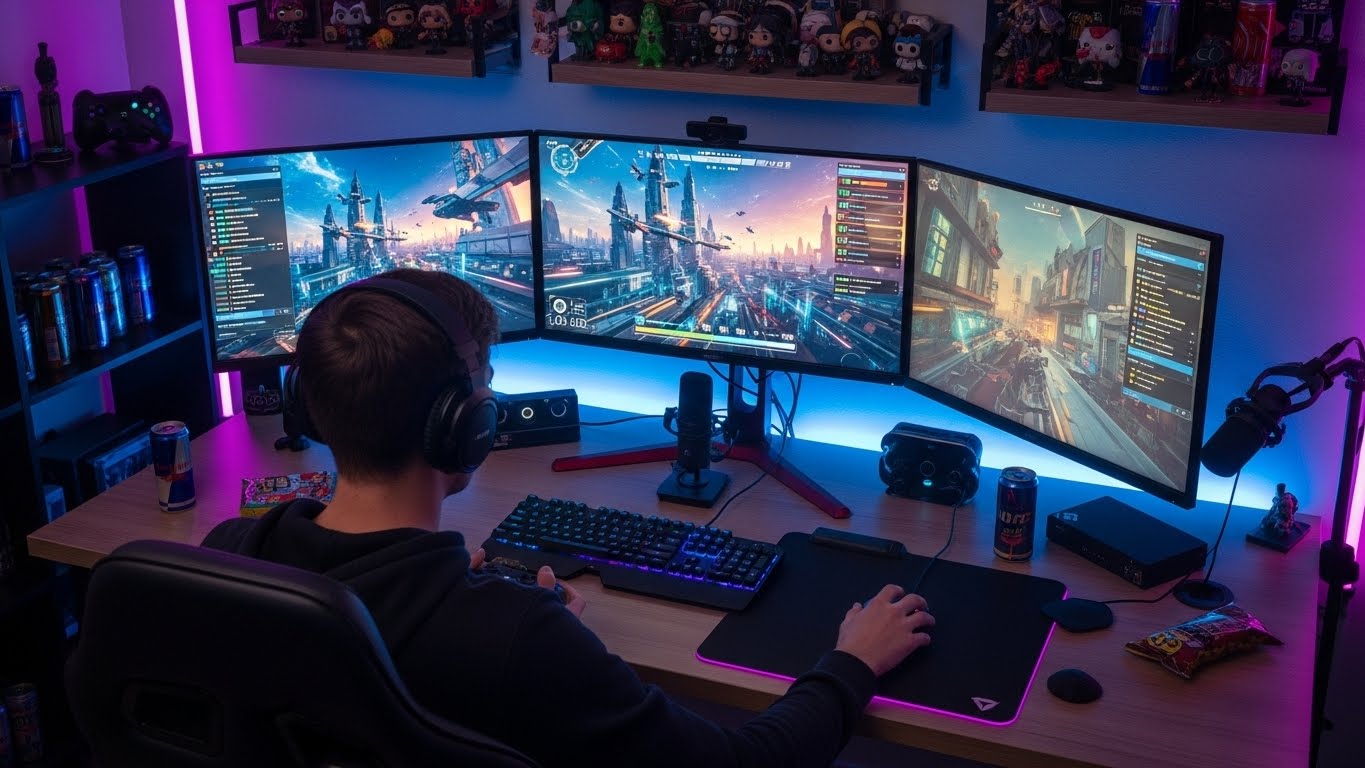





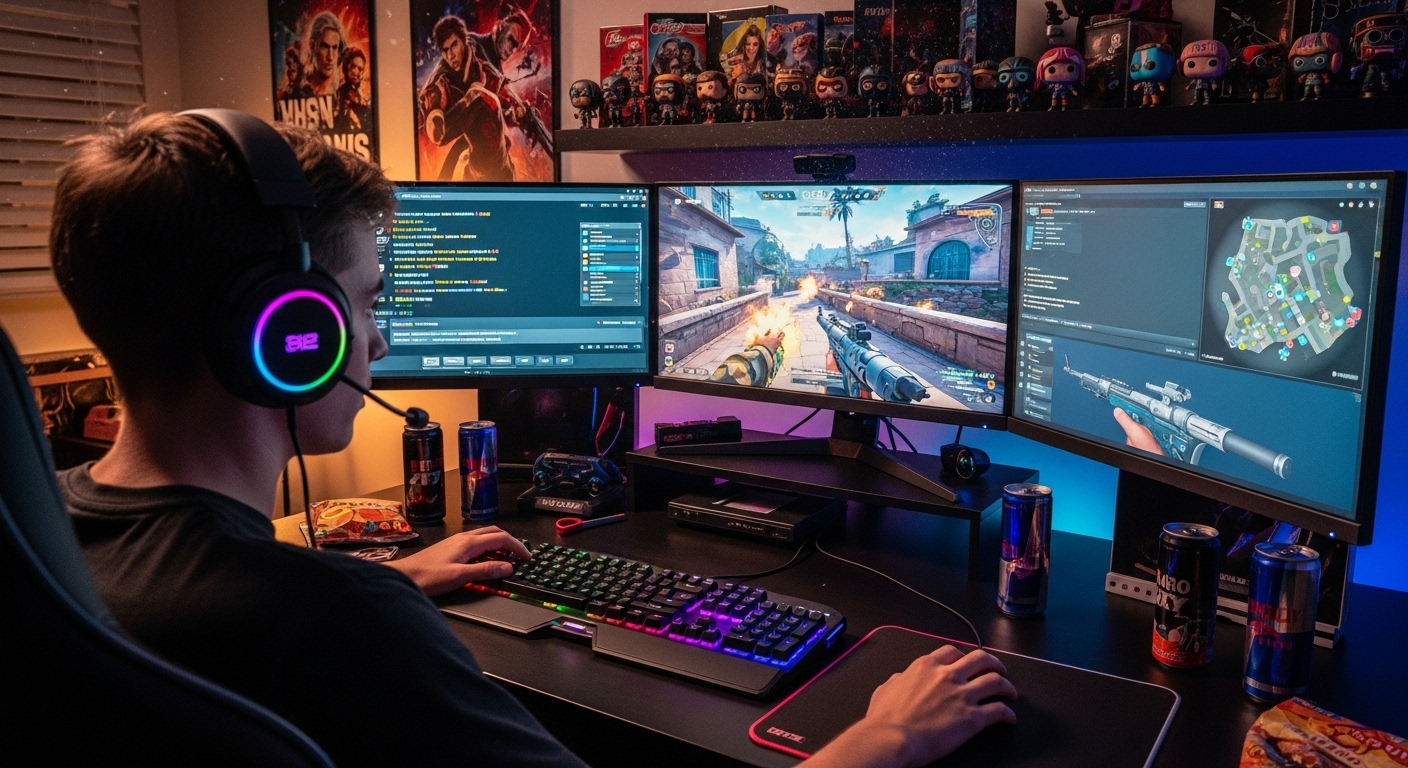
Gaming has long been a part of human entertainment, evolving from simple arcade games to vast virtual universes that captivate millions of players worldwide. The gaming industry has transformed dramatically over the past few decades, and what began as a niche hobby has now blossomed into a multi-billion-dollar global phenomenon. In this blog post, we’ll explore how gaming has evolved, how technology has shaped the industry, and what the future of gaming holds.
The Early Days: From Arcade to Console
In the 1970s, video games were a novelty, often found in arcades or played on early home consoles. These games were simple in design, with pixelated graphics and straightforward gameplay. Titles like Pong (1972) and Space Invaders (1978) were some of the first major hits, laying the foundation for the gaming industry. At this time, games were designed for short, fun bursts of play, typically requiring a coin to get started.
The release of the Atari 2600 in 1977 marked a key moment in the development of home consoles. For the first time, players could experience gaming in their living rooms. However, the technology was still limited, and graphics were basic at best. Even so, the ability to play games like Asteroids and Pac-Man at home was a revolutionary experience.
The 80s and 90s: The Rise of Gaming Culture
As the 80s and 90s arrived, gaming experienced a boom that would transform it into a mainstream hobby. The 80s saw the rise of arcade culture, with players flocking to arcades to compete for high scores on games like Donkey Kong and Galaga. But it was during this time that home consoles became more advanced and popular. The Nintendo Entertainment System (NES) launched in 1985, introducing classic games like Super Mario Bros. and The Legend of Zelda. These franchises would go on to shape the identity of gaming for generations.
The 90s marked a significant shift with the advent of 3D graphics and the rise of personal computers as a gaming platform. Consoles like the Sony PlayStation and the Nintendo 64 made 3D gameplay mainstream, allowing for richer, more immersive worlds. Games like Final Fantasy VII, Super Mario 64, and The Legend of Zelda: Ocarina of Time became cultural touchstones, further solidifying video games as a legitimate form of entertainment.
This era also saw the rise of multiplayer gaming, both online and offline. The introduction of LAN (Local Area Network) parties, where players could connect their PCs for games like Doom and Warcraft, opened up new avenues for competition and social interaction in the gaming community.
The 2000s: A New Era of Immersive Worlds
As we entered the 2000s, gaming underwent yet another evolution, with graphics and gameplay reaching new heights. Consoles like the PlayStation 2, Xbox, and later the PlayStation 3 and Xbox 360, featured graphics that were as realistic as ever, with detailed environments and lifelike characters. The evolution of hardware meant that games could now deliver experiences that were previously thought impossible.
One of the most significant developments of this era was the rise of online multiplayer gaming. Games like World of Warcraft, Halo 2, and Call of Duty 4: Modern Warfare brought millions of players together in virtual worlds, where they could collaborate or compete against one another. Online multiplayer gaming introduced a social dimension to gaming that is now one of its defining features.
Meanwhile, the early 2000s saw the rise of mobile gaming, especially with the launch of smartphones. While mobile games like Angry Birds and Candy Crush may seem simplistic in comparison to console and PC games, they made gaming more accessible to a wider audience. Mobile gaming created an entirely new market, and even now, games like Fortnite are pushing the boundaries of what’s possible on mobile devices.
The 2010s: The Digital Revolution and Indie Games
The 2010s brought about the most profound changes in gaming to date, largely due to digital distribution platforms, the rise of indie developers, and the growth of esports. Online digital stores like Steam, the PlayStation Store, and Xbox Live made it easier for players to buy and download games directly to their consoles or PCs, eliminating the need for physical copies.
In addition to the mainstream AAA titles, the indie game movement also flourished during this decade. Independent developers, free from the constraints of major publishers, began producing unique and innovative games that focused on creativity and storytelling. Titles like Minecraft, Undertale, Stardew Valley, and Hollow Knight proved that smaller developers could compete with industry giants in both popularity and impact.
The 2010s were also the decade that esports went from a niche activity to a global phenomenon. Games like League of Legends, Dota 2, Counter-Strike, and Overwatch helped transform competitive gaming into a professional sport, with multi-million-dollar prize pools and televised tournaments. The rise of live-streaming platforms like Twitch and YouTube Gaming allowed players to broadcast their gameplay to millions, further cementing the rise of gaming as a form of entertainment in the public eye.
The Current State of Gaming: Virtual Reality, Streaming, and the Metaverse
As we move further into the 2020s, the gaming industry continues to push the boundaries of what’s possible, with new technology constantly reshaping the landscape. One of the most exciting developments is the rise of virtual reality (VR) and augmented reality (AR). VR headsets like the Oculus Rift, HTC Vive, and PlayStation VR allow players to fully immerse themselves in a game, blurring the line between the virtual and real worlds.
AR, while not as widely adopted yet, is starting to gain traction with games like Pokémon GO, which use real-world locations and augmented visuals to create a more interactive gaming experience. As the technology continues to improve, VR and AR may become a central part of gaming, offering players a truly immersive experience.
Another significant shift is the rise of cloud gaming and streaming platforms. Services like Google Stadia (now defunct), NVIDIA GeForce Now, and Xbox Cloud Gaming allow players to stream games directly to their devices without the need for expensive hardware. Cloud gaming removes the barrier of needing high-end PCs or consoles, offering a more accessible way to play the latest games.
At the same time, the concept of the “metaverse” is gaining traction. Virtual worlds like Second Life and Roblox have been around for a while, but companies like Meta (formerly Facebook) are betting big on the idea of the metaverse—an interconnected virtual world where players can socialize, work, play, and even create. While the metaverse is still in its early stages, it represents the next frontier of virtual interaction and could be a major part of the future of gaming.
The Future of Gaming: AI, Procedural Generation, and More
Looking ahead, the future of gaming is as exciting as it is unpredictable. One of the biggest developments on the horizon is the integration of artificial intelligence (AI) into gaming. AI can be used to create more dynamic and responsive game worlds, where the environment and non-playable characters (NPCs) react intelligently to the player’s actions. This could lead to more personalized and unique gameplay experiences, where no two playthroughs are the same.
Procedural generation, which is already used in games like No Man’s Sky and Minecraft, is another exciting development. This technology allows developers to create vast, procedurally generated worlds that are unique every time a player enters them. This could lead to infinite possibilities in terms of game design, offering players an ever-changing landscape to explore and conquer.
Moreover, the integration of machine learning and data analytics may allow developers to create more immersive storytelling experiences. As AI continues to improve, we may see characters that not only respond to our choices but also remember past interactions, allowing for deeper narratives and more emotional connections with the virtual world.
Finally, as the gaming community continues to grow, we may see an even greater emphasis on inclusivity and accessibility. Developers are already making strides toward more accessible gameplay, with features like colorblind modes, adjustable difficulty settings, and adaptive controllers. In the future, we may see even more innovations that allow gamers of all abilities to enjoy gaming to its fullest potential.
Conclusion
From the pixelated screens of early arcade games to the breathtaking virtual worlds of today, gaming has come a long way. Technology has driven this evolution, with each new advancement opening up new possibilities for creativity and immersion. The gaming industry has transformed from a niche pastime to a global entertainment powerhouse, and as technology continues to advance, the future looks even brighter.
As players, we are not just consumers of these worlds but active participants in shaping the direction of gaming itself. Whether through the rise of indie games, the growth of esports, or the potential of virtual and augmented reality, the future of gaming promises to be an exciting one—one where we will continue to explore, create, and interact in ways we never imagined possible. So, grab your controller, your VR headset, or even your mobile phone—because the world of gaming is only just beginning.