





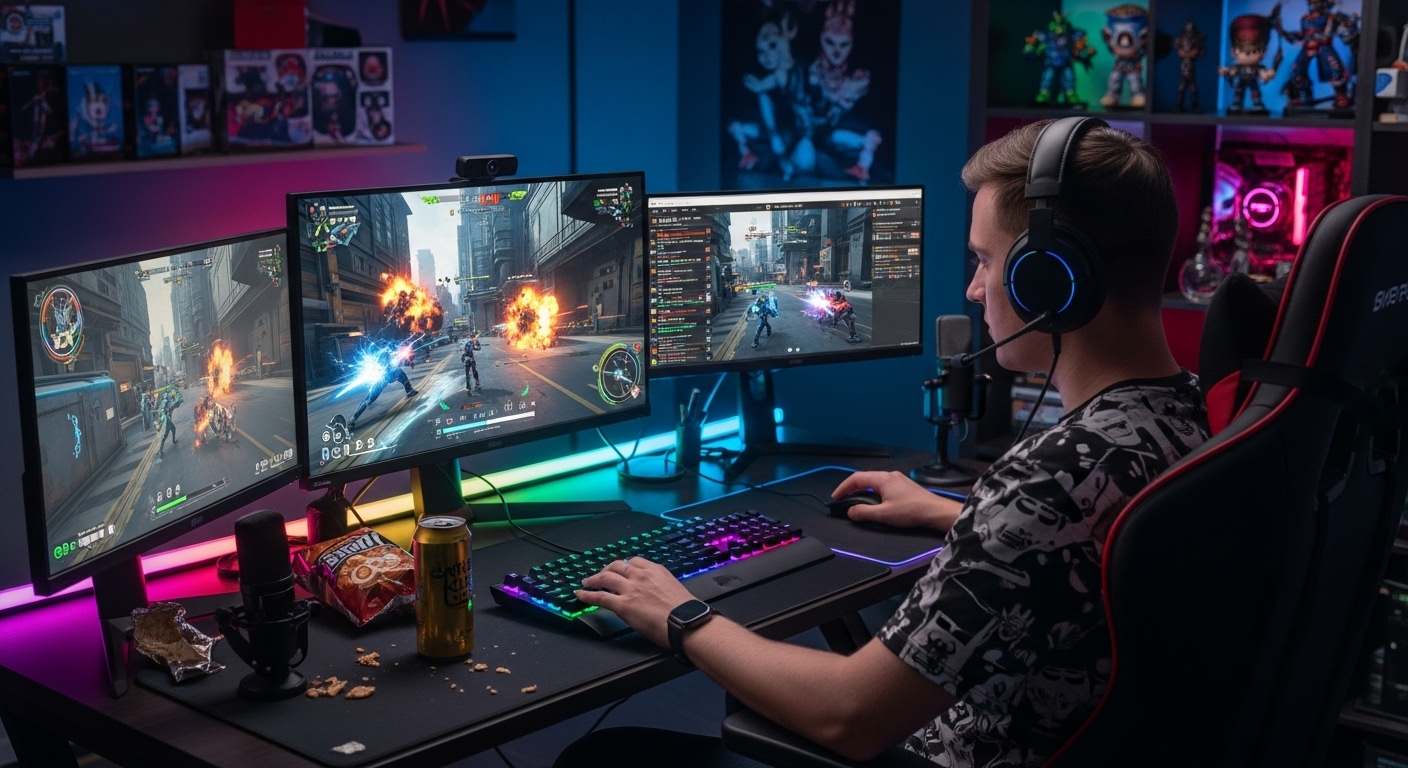
In just a few decades, gaming has transformed from a niche hobby into a global entertainment phenomenon. What began with simple pixelated characters and basic gameplay has evolved into a rich, complex world full of immersive experiences that captivate millions. Whether you’re an old-school gamer or someone just getting into the scene, there’s no denying that the gaming landscape has undergone a massive change. This blog post explores the evolution of gaming, its current state, and where the industry is headed in the future.
The Birth of Gaming: A Simple Beginning
The story of video gaming begins in the 1970s, with the introduction of arcade games. These early titles like Pong and Space Invaders captured the imagination of people worldwide. With their simple mechanics and addictive gameplay, arcade games laid the foundation for what would become a global industry. As players gathered around these machines, competition and high scores became a staple of the gaming experience.
At the same time, the home console market started to emerge. The Atari 2600, released in 1977, was one of the first systems to allow people to play games at home. While the games were basic by today’s standards, they marked the start of a new era in interactive entertainment.
The 3D Revolution: A New Era of Gaming
The 1990s brought one of the most significant milestones in gaming history: the shift from 2D to 3D graphics. With the release of consoles like the Nintendo 64 and the Sony PlayStation, developers gained the tools to create more immersive and expansive worlds. Games like Super Mario 64 and The Legend of Zelda: Ocarina of Time revolutionized gameplay by introducing true 3D environments and innovative mechanics. These titles became benchmarks for future games and demonstrated the potential of 3D graphics in gaming.
The 1990s also marked the rise of first-person shooters (FPS) and online multiplayer games. Titles such as Doom and Quake allowed players to step into the shoes of their characters and engage in intense, fast-paced action. This era laid the groundwork for what would become one of the most enduring gaming genres in history.
Modern Gaming: Expanding Worlds and Deep Narratives
In the 2000s and 2010s, gaming became more than just a form of entertainment—it became a means of storytelling. With the advancement of graphics technology and the power of modern consoles and PCs, developers began to craft expansive open worlds that players could explore at their own pace. Games like The Elder Scrolls V: Skyrim, Red Dead Redemption 2, and The Witcher 3 set new standards for what was possible in terms of world-building, storytelling, and player choice.
These modern titles are known not only for their visual fidelity but also for their intricate narratives. Players are no longer simply completing tasks or reaching high scores—they are experiencing stories that can evoke deep emotional responses. The integration of player choice and branching storylines has allowed games to become interactive novels, offering countless paths and endings.
The Rise of Online Multiplayer and eSports
One of the most important developments in the world of gaming over the past two decades has been the growth of online multiplayer games. Titles such as Fortnite, League of Legends, and Call of Duty have brought millions of players together, creating vibrant online communities. Multiplayer gaming has transformed from local split-screen sessions to massive global networks where players can interact, compete, and collaborate in real-time.
This shift to online gaming has given rise to eSports, a booming industry where professional gamers compete for large cash prizes and the chance to be crowned the best in the world. Tournaments like The International and the League of Legends World Championship attract millions of viewers and have helped elevate gaming to the status of traditional sports. eSports organizations, coaches, and analysts now support competitive gaming as a full-time profession, and some even compare the intensity and skill required to succeed in eSports to that of traditional athletic competitions.
Mobile Gaming: Gaming at Your Fingertips
Another major revolution in the gaming world has been the rise of mobile gaming. With the advent of smartphones, millions of people now have the ability to play games wherever they go. Titles like Pokémon Go, Clash Royale, and Candy Crush Saga have introduced gaming to a broader audience and made it accessible to people who may have never considered gaming before.
Mobile games have evolved from simple, time-killing apps to fully featured experiences with complex mechanics and high-quality graphics. Mobile gaming has allowed developers to experiment with new game design ideas, such as augmented reality (AR) in Pokémon Go or asynchronous multiplayer in Clash Royale. This accessibility has changed the face of gaming, turning it into a casual, everyday activity for millions of people.
Virtual Reality: Stepping Into New Realms
The next frontier in gaming technology is virtual reality (VR). VR offers a level of immersion that traditional gaming cannot match, allowing players to step into their favorite games and interact with the environment in new ways. Headsets like the Oculus Rift and PlayStation VR offer players the ability to physically move around in a virtual space, providing an experience that is both thrilling and surreal.
While VR gaming is still in its infancy, it has already shown great potential in genres like horror, exploration, and action. Games such as Beat Saber and Half-Life: Alyx have demonstrated how VR can create completely new ways of playing and experiencing games. As VR hardware improves and becomes more affordable, it’s likely that VR gaming will continue to grow, potentially reshaping the future of the gaming industry.
The Future of Gaming: AI, Cloud Gaming, and More
As technology continues to evolve, the future of gaming looks incredibly promising. One of the most exciting trends is the use of artificial intelligence (AI) in gaming. AI is being integrated into games to create more realistic and responsive non-playable characters (NPCs), generate dynamic narratives, and adapt to players’ actions in real-time. This could lead to more personalized and engaging experiences, where no two playthroughs are exactly alike.
Cloud gaming is another technology that’s poised to change the industry. Platforms like Google Stadia and Xbox Cloud Gaming allow players to stream games directly to their devices without needing powerful hardware. This means that high-quality gaming could be accessible to anyone with a reliable internet connection, further democratizing access to gaming.
Additionally, the continued growth of augmented reality (AR) and mixed reality (MR) could blur the lines between the real world and the virtual world. Imagine playing a game that uses your real-world surroundings as the backdrop, or interacting with virtual elements that seem to exist right in front of you. The future of gaming holds endless possibilities.
Conclusion: Gaming’s Infinite Potential
From humble beginnings in arcades to the global, interconnected world of online multiplayer and virtual reality, gaming has come a long way. It has not only revolutionized entertainment but has also become an integral part of global culture. The industry continues to innovate, pushing the boundaries of technology and storytelling. As we look to the future, one thing is clear: gaming is far from finished. With each new advancement, the world of gaming grows richer, more immersive, and more exciting than ever before. Whether you’re exploring vast open worlds, battling foes in online arenas, or stepping into virtual reality, the future of gaming promises to be an unforgettable ride.


